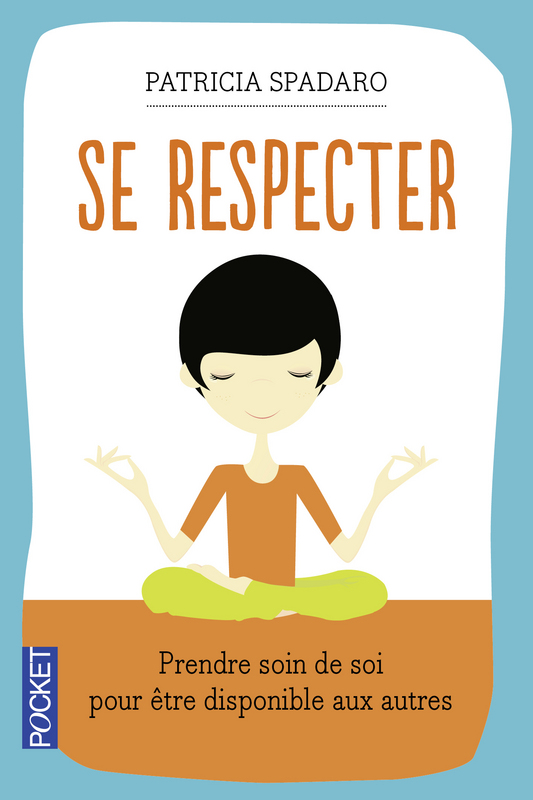
Do You Know How to Receive?

June 28th, 2010 by Patricia Spadaro

“We must make the choices that enable us to fulfill the deepest capacities of our real selves.” —Thomas Merton

Giving is great, but is it always better than receiving? Is giving better than receiving if our giving ends up knocking us flat on our backs, compromising our ability to give with resilience to others?

When those of us who are out-of-balance givers wake up to the truth that giving isn’t always better than receiving, we want to know how we can start to receive. At my recent book signings in New York and Connecticut for my book Honor Yourself: The Inner Art of Giving and Receiving, that was certainly the theme. People were asking me: “What can I do to become a better receiver?” They really wanted to turn around their habit of not being able to say no to others. Like many of us, they were so good at keeping track of everyone and everything that they had lost track of themselves. It’s a syndrome I’ve come to call “sacrifice on demand.”

My book goes deeply into that subject from many different angles, but here are three keys I talked about at my recent book signings that can help you start practicing a healthy habit of receiving.

1. Ask for support—and look at it as a sign of strength.
Those of us who give a lot also tend to be shy about asking for support when we need it. You might think that asking for support means that you are weak. That’s not true. In fact, when appropriate, asking for support is a sign of strength, and a sign of great love. Why? When you seek support in making the best decisions, it means you care about those who will be affected by your choices. Not only that, but by asking for support you are saying to yourself, “I am worthy of receiving.”

ASK YOURSELF: Where can I use some support in my life?
Remember, support comes in all shapes and sizes. Maybe it’s asking a spouse to make dinner, asking a neighbor to help you lift something heavy in your yard, getting guidance from a trainer for the right exercise routine, or talking through an important decision with someone who has expertise in that arena.

2. Get passionate. One of the reasons you may find yourself constantly getting bumped off your own to-do list is that you don’t have a passion that makes it clear—to yourself and to others—what’s the centerpiece of your life right now. When you have a burning desire to accomplish something, you bet it gets a top spot on your to-do list. What’s not a priority at the moment then naturally falls to the bottom of the list.

ASK YOURSELF: What’s my magnificent obsession? There’s a good article in the June 2010 issue of Psychology Today called “Go Ahead, Obsess!” by Eric Maisel and Ann Maisel. (It’s not yet posted online but you can get it on news stands.) I love their take on engaging in “a productive obsession,” which they define as “putting yourself wholeheartedly into a useful and meaningful passion.” Check it out for some inspiration.

3. Don’t wait for someone to give to you—give to yourself.
The most important person who will ever give to you IS you, and it’s the simple things that make the biggest difference. One day, after a particularly challenging week, I decided to buy myself a bunch of roses. I looked for that beautiful shade of yellow-peach that I love. Later that week, someone was in my kitchen, saw the roses, and asked, “Who gave you those flowers? What’s the occasion?” That gave me the opportunity to affirm out loud what my little present to myself was really all about. “I bought them for myself,” I said. “I’m celebrating . . . myself!”  Those roses made me smile every time I saw them. More than that, buying them was a way of affirming to myself: “I value you, and you deserve these!”

ASK YOURSELF: What gifts will I give myself today?

I invite you to join the conversation and share your thoughts . . .

Honor Your Inner Impulses

April 14th, 2010 by Patricia Spadaro

“Most of us,” said prominent psychologist Abraham Maslow, “have learned to avoid authenticity.” That’s a serious charge and a worthy challenge. What he meant was that many of us are trained to ignore our inner signals. We suppress our feelings rather than express them. We haven’t dug deep and gotten in touch with our own impulses. And it’s those impulses that impel us to follow our real desires and that make us excited to share our life’s passions with others.

In his work, Malsow found that connecting with our inner voice is extremely important. He said that people who are psychologically strong and healthy are “able to hear their inner-feeling-voices more clearly than most people.” They use internal not external criteria when making their decisions, everything from what to eat or wear to issues of values and ethics. They are clear on what they do and do not want. Unfortunately, he says, the way we are raised often produces the opposite effect. He uses the example of the child who says he detests spinach but whose feelings are nullified by his mother, who tells him, “We love spinach,” when she could just as easily have said, “I know you don’t like spinach, but you have to eat it anyway for such-and-such reasons.”

Losing touch with your inner knowing can be dangerous. We tend to attribute stress, anxiety, and depression to some ineluctable, fast-paced force of modern life. But those can be symptoms of something deeper—the outer manifestation of the inner tension that churns within us when we are denying our own inner impulses.

Are you listening to yourself?

I find that it takes practice to listen for what your own inner voice is telling you, especially if you’re one of those people (like me) who is better at giving to others than to yourself. One thing I’ve found very helpful is to literally listen to my voice—to listen to how I am speaking rather than what I am saying.

We use this skill all the time to read others. We know that a friend is upset or burdened when we hear her voice crack. We know that our children are happy when they are animated and speak quickly. If we call a parent and we hear a listless, dull voice at the other end of the phone, we know something is wrong. It’s not the words that tell us but the expression in the voice. The tone tells it all.

While we’re accustomed to reading others in this way, we can get so caught up in what’s happening around us that we forget to listen to ourselves. Yet that is exactly what gives us valuable clues for getting back on track. If, for instance, you catch yourself sounding grumpy, impatient, or tired, it’s probably time to ask, “What am I feeling, and what can I do to honor myself right now?” If you hear a worried or frantic tone in your voice, that may be a sign that you need to slow down and get back in touch with the present moment rather than letting speculative fears of the future spin you out of control.

Your voice holds valuable messages if you listen for them—and it’s not just the downturns that speak to us. When you catch that lilt of excitement in your voice or when you hear yourself happily whistling or humming away, take note. What are you doing or thinking about that is making your heart sing? That’s what can bring more joy into your life when you do it again and again.

>> Do you take the time to listen to yourself?

>> What is your inner voice telling you?

>> Are you in touch with your inner impulses—with what makes you excited to be alive?

>> Are you being honest about what your inner voice is saying, and are you committed to following through on it?

Join the conversation and share your comments, questions, and lessons with us.

Honor Your Own Style

February 28th, 2010 by Patricia Spadaro

Life is never a one-size-fits-all formula. If you are to develop and give your gifts (that’s why we’re here, isn’t it?), you must honor who you are and celebrate your own voice. That means embracing the paradox that while it’s important to value the mentors and role models who guide us, we must also rely [...]

Read the full article ->

Creating Spaces in Your Togetherness – Part 2

February 18th, 2010 by Patricia Spadaro

Are you honoring the paradox of dependence and independence?
We honor ourselves when we ask for the support we need. And yet there are times when life compels us to rely on ourselves because flying solo is exactly what we need.
The following story from the Hasidic tradition of Judaism highlights why self-reliance is indispensable. A [...]

Read the full article ->

Creating Spaces in Your Togetherness

February 13th, 2010 by Patricia Spadaro

Honor your relationships by honoring yourself—a different approach to relationships that can make all the difference.
Relationships, like most things in life, are paradoxical. Healthy relationships require an artful swing between dependence and independence, togetherness and solitude. Even in the closest of connections, where mutual support should come with the territory, it’s essential to strike a [...]

Read the full article ->

What’s Your Self-Esteem Quotient?

January 28th, 2010 by Patricia Spadaro

Your sense of self-worth—how you value yourself, your innate value, and your gifts—guides your life. It determines how others see you and treat you, what kind of people show up in your life, how you act and react. Your self-esteem determines how you make choices and set priorities moment by moment, every day.
What does it [...]

Read the full article ->

Keeping Your Life Fresh and Fun

January 14th, 2010 by Patricia Spadaro

At a book signing for my new book Honor Yourself last summer, I met a special young lady who taught me to appreciate the “firsts” in life—no matter what age we are. She was about 5 or 6 years old, and she told me about a trip she would be making in a few months [...]

Read the full article ->

Home  |  About Patricia  |  About Honor Yourself  |  Paradox   Articles  |  Get in Touch

Practical Spirituality with Patricia Spadaro
Copyright © 2004-2010. Patricia R. Spadaro. All Rights Reserved.
info@practicalspirituality.info